Screen Protector Cutting System
Improving Speed and Accuracy for In-store Technicians
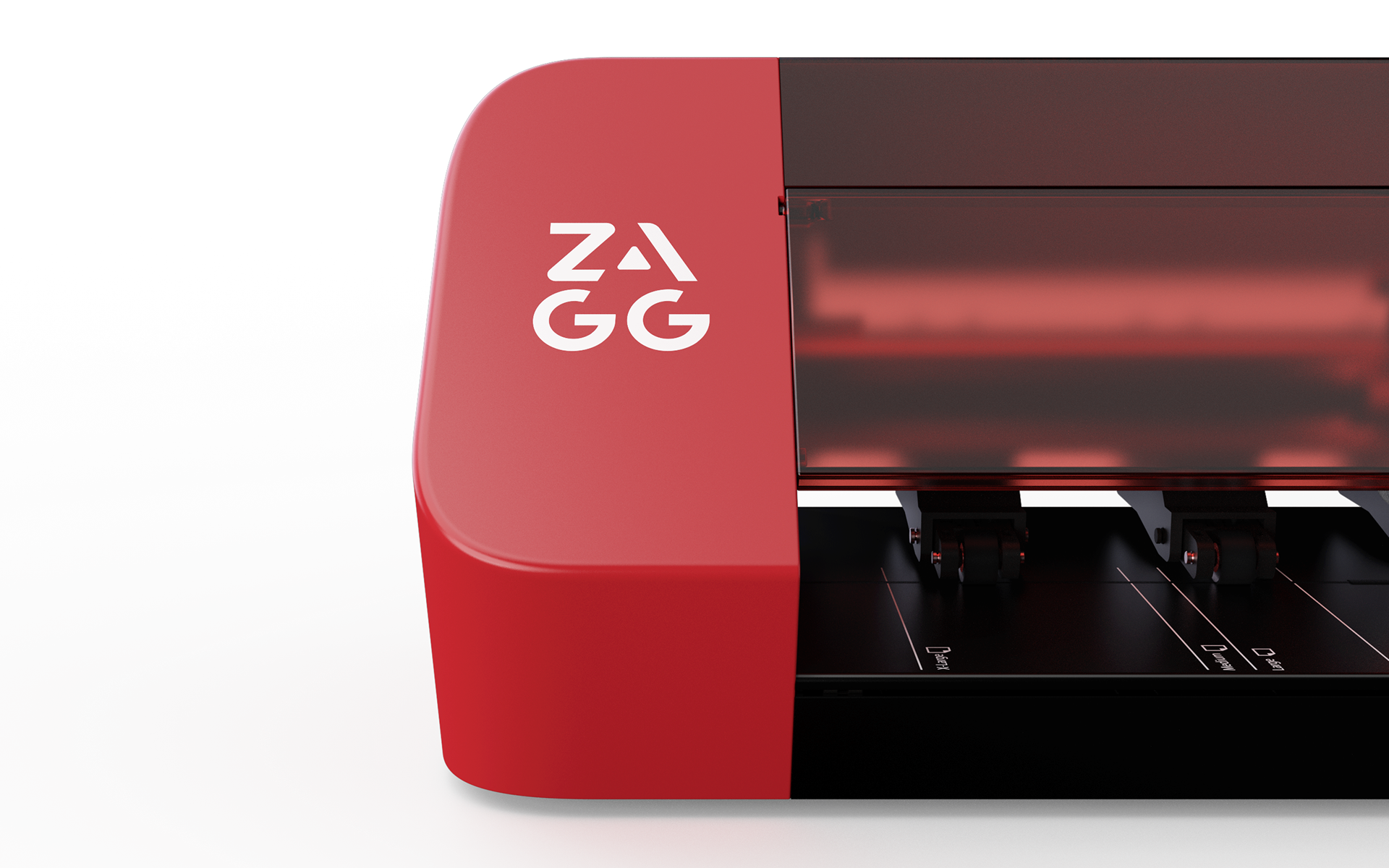
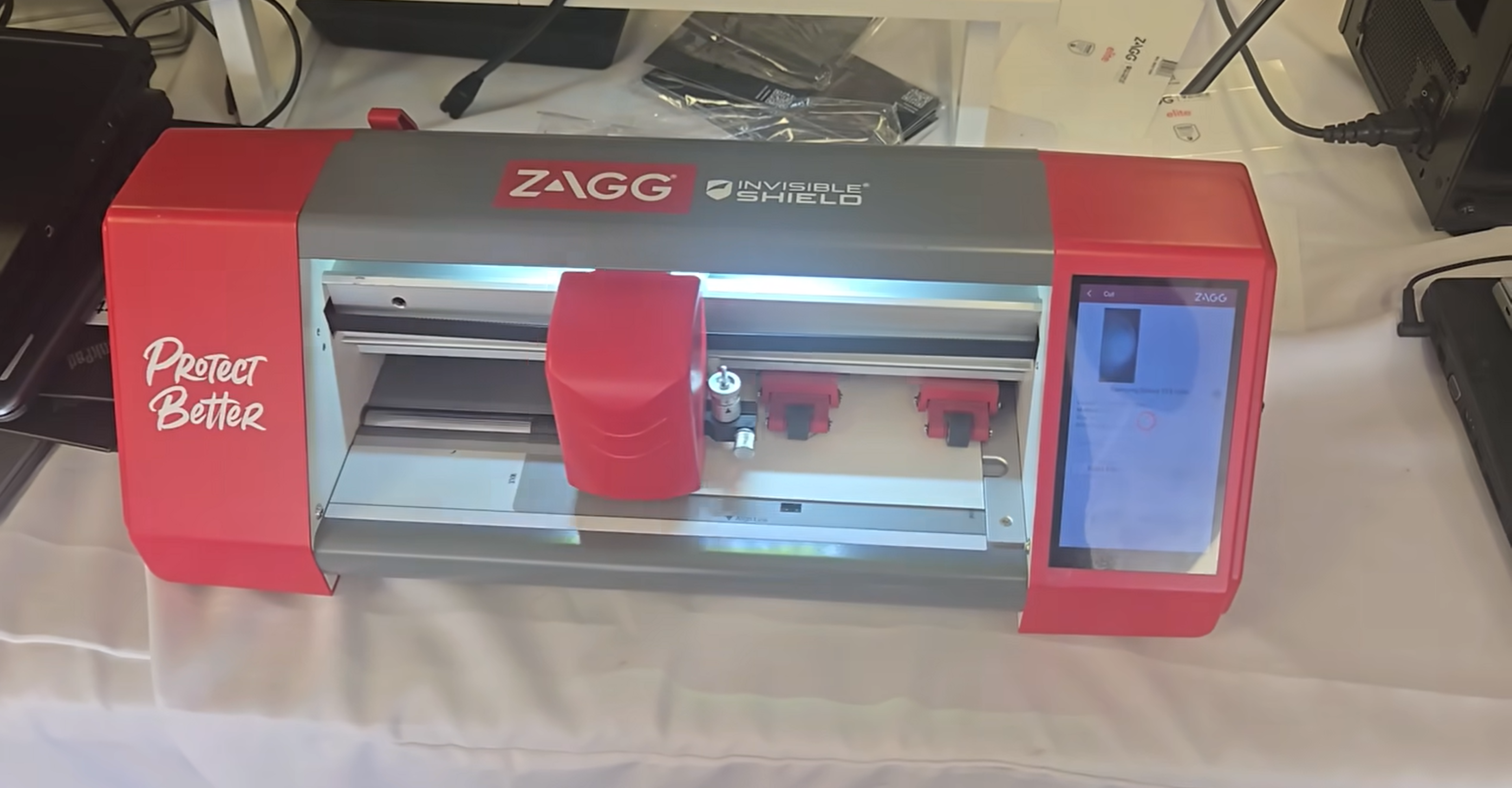
The brief was to redesign an in-store machine used in phone stores to cut custom screen protectors for different devices. The goal was to improve speed, usability, and operational clarity for the store technicians operating the system.
The starting point was an existing unit designed primarily around internal packaging and component stacking. While the cutting mechanism itself worked well, the surrounding structure didn’t fully support how the machine was actually used during busy customer interactions.
Working closely with factory teams and store technicians, I reorganised the system around real use. By shifting the machine from a packaging-driven layout to one centred on the operator, the redesign simplified setup, reduced alignment errors, and introduced a clearer, more approachable form suited to the retail environment, all without changing the core mechanical system.
Role:
Lead Industrial Designer responsible for redesigning the ISOD cutting system to improve usability and efficiency in retail environments.
Scope:
Industrial Design • Product Architecture • System Redesign • Engineering Collaboration
Outcome:
Launched the cutting machine with a faster, more dependable cutting process, producing more consistent cuts and reducing wasted material.
Context
When I began the project, the existing unit was mechanically functional but difficult to operate quickly. Its structure had been designed around internal component packaging rather than the technician’s interaction with the machine.
In practice, store technicians often needed to prepare screen protectors quickly while assisting customers. Loading sheets, selecting the correct material, and aligning them accurately could slow the process and introduce mistakes.
The challenge was to make the system faster and more intuitive to operate while keeping the internal cutting mechanism unchanged.
System Redesign
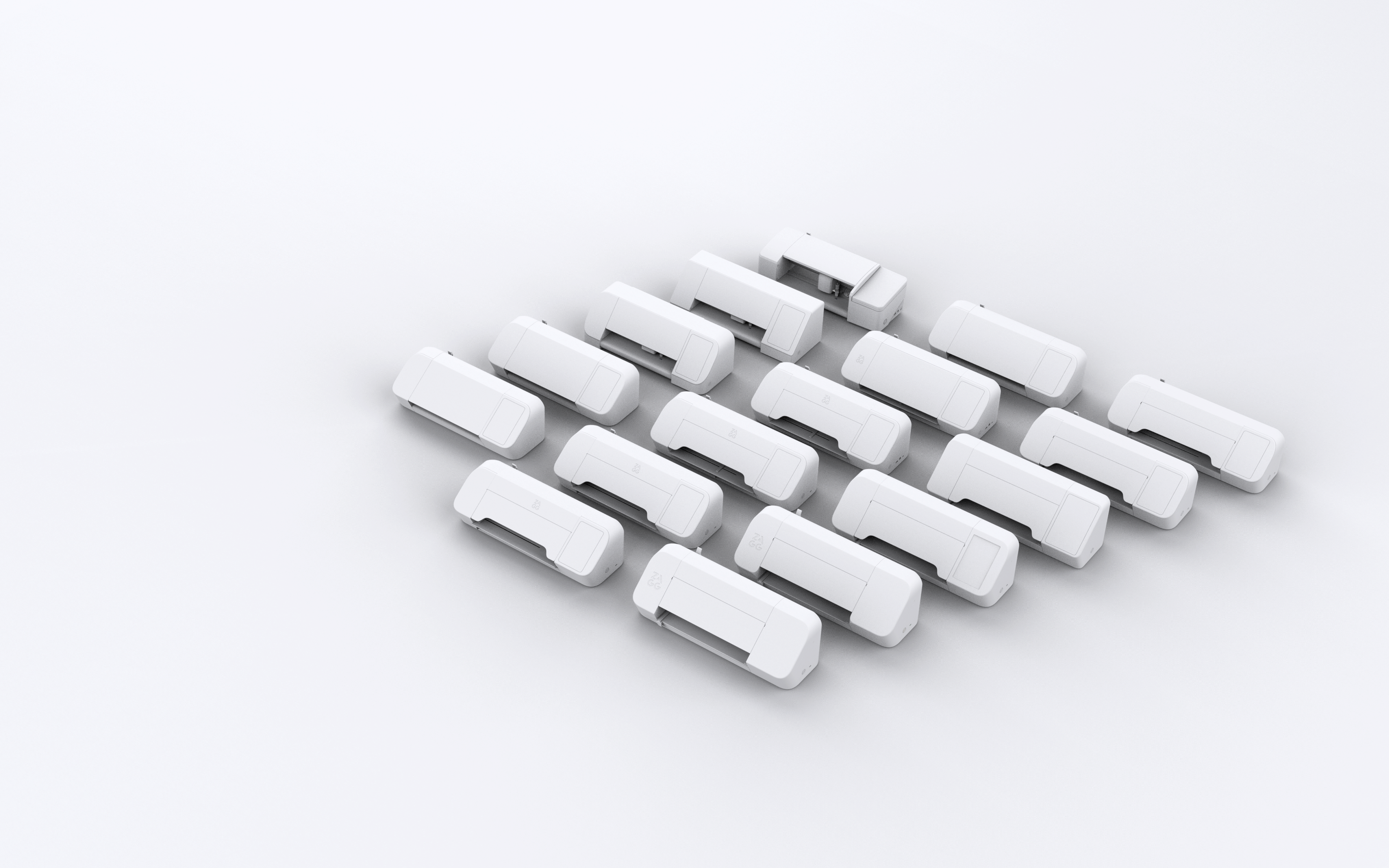
Rather than redesigning the internal mechanics, I focused on reorganising the surrounding structure and interaction points.
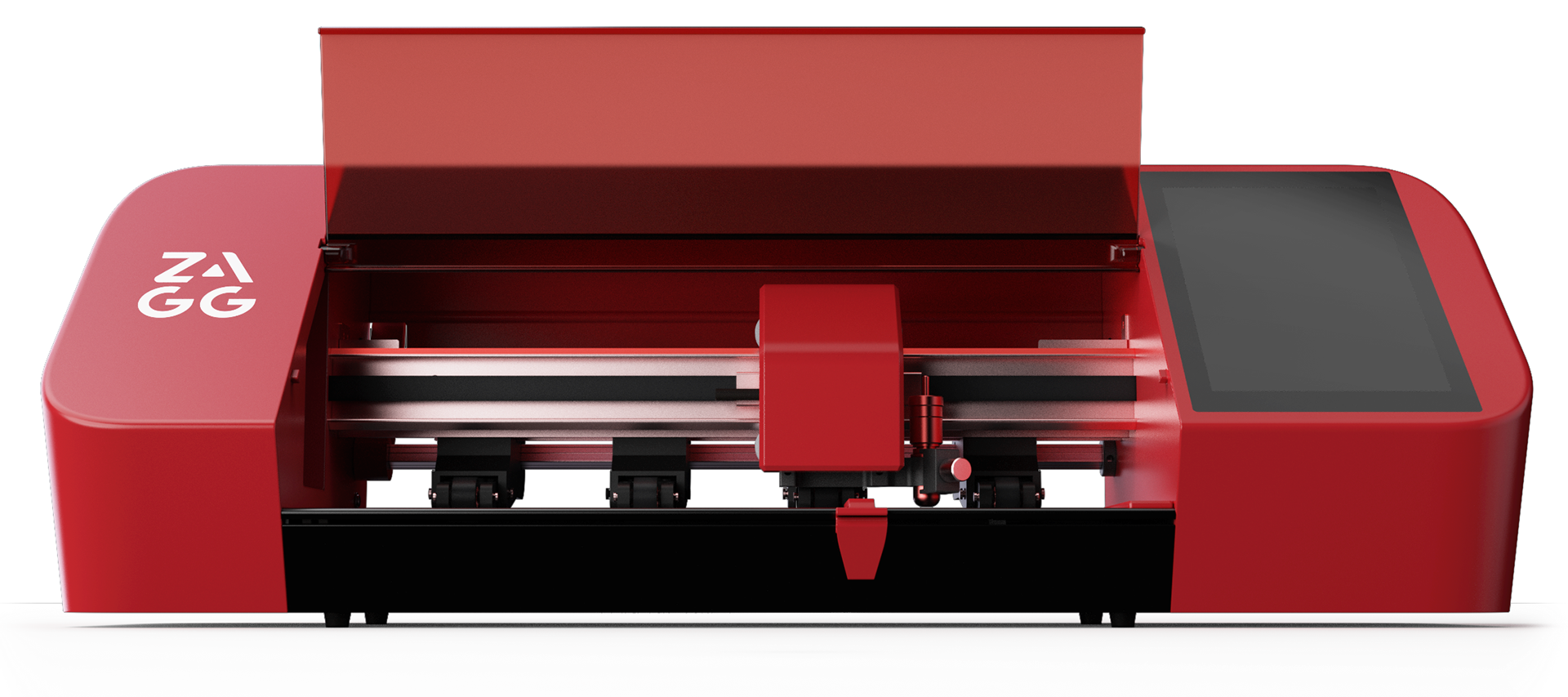
Access areas, service panels, and operator touchpoints were repositioned to better match how technicians naturally approached the machine on a store counter. The overall footprint was also refined to make the unit feel more compact and approachable while maintaining its full capabilities.
The exterior form and surface layout were simplified to create clearer visual cues, helping technicians quickly understand where to interact with the machine.
This shifted the system from a packaging-driven layout to one designed around operator interaction.
Interaction Improvements
Observing how technicians used the machine revealed consistent friction during sheet loading and setup. Incorrect sheet selection and alignment issues slowed operation and reduced confidence during use.
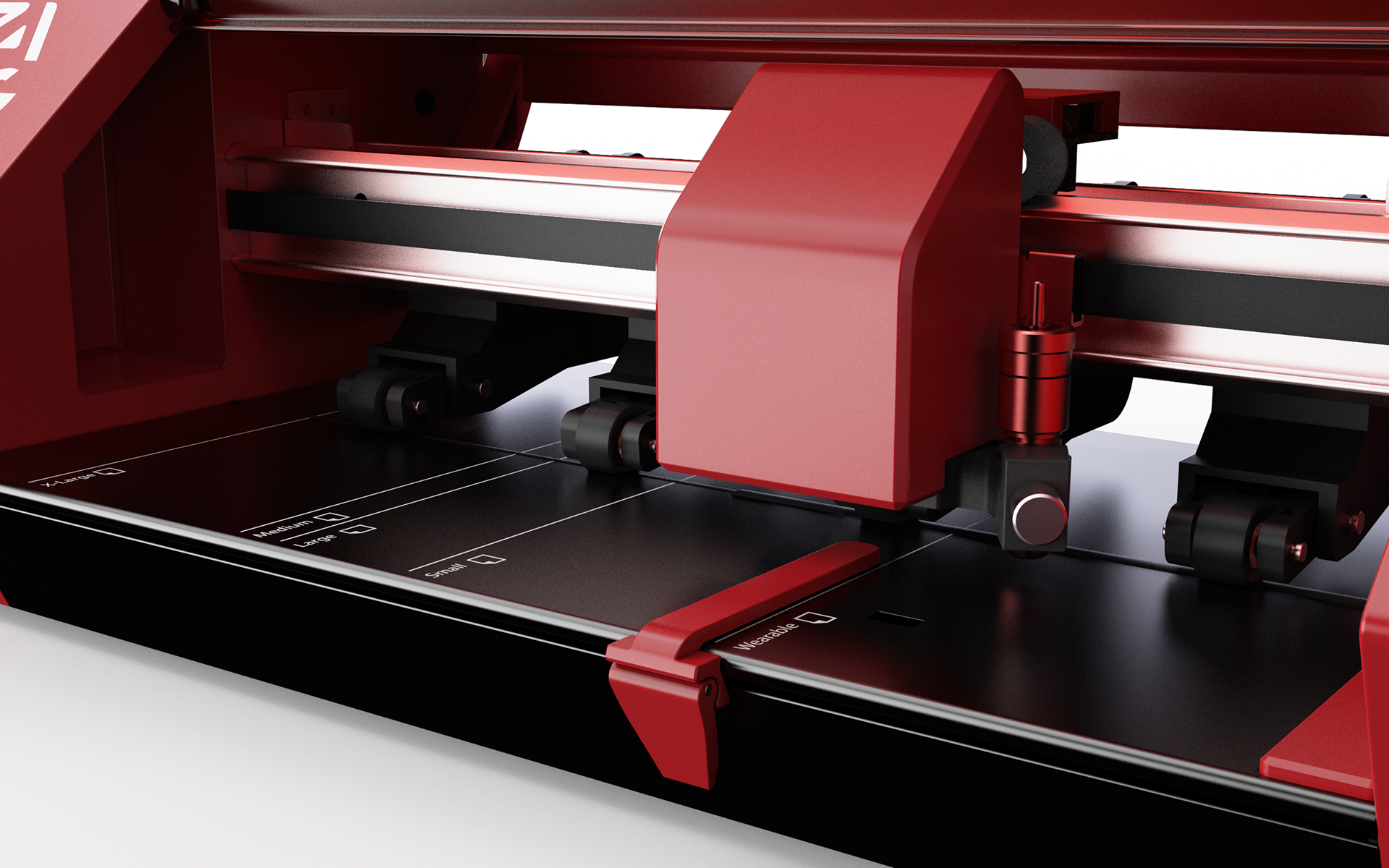
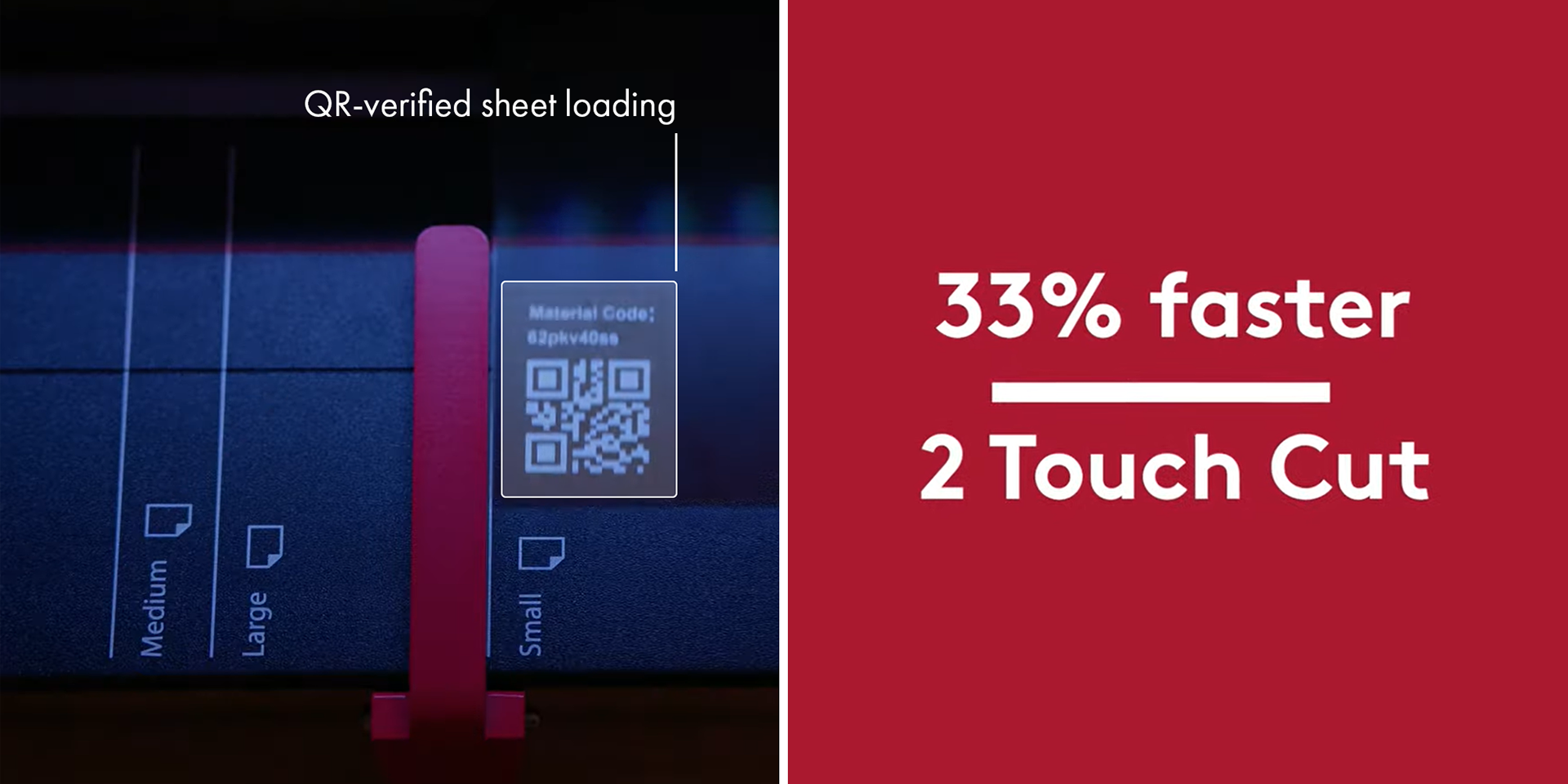
To address this, I redesigned the loading process as a guided interaction:
• QR code scanning verifies the correct sheet
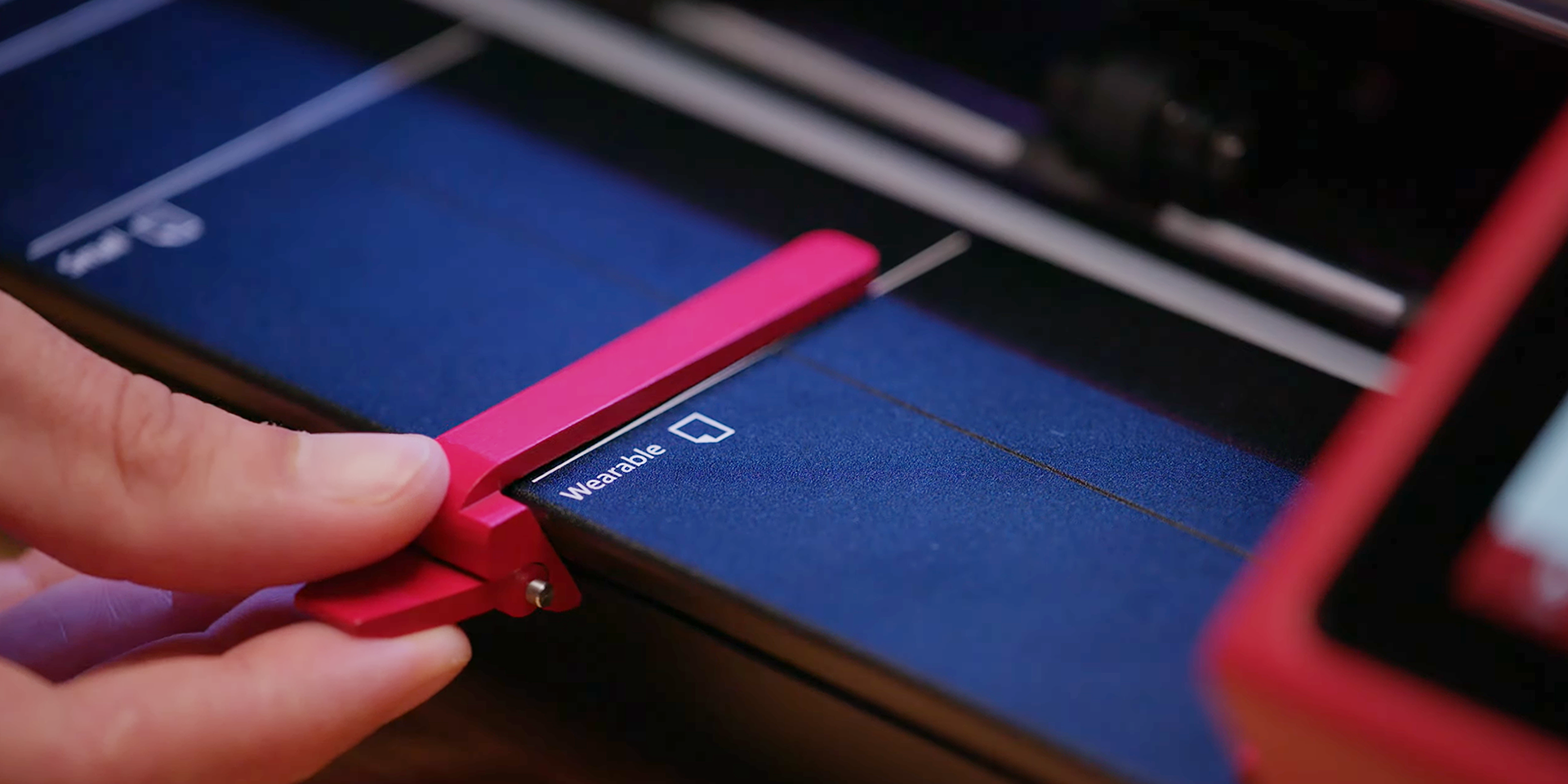
• A locking slider secures alignment before cutting
• Clear loading direction reduces hesitation during setup
• A locking slider secures alignment before cutting
• Clear loading direction reduces hesitation during setup
The goal wasn’t to add complexity, but to make the process clearer and easier to perform consistently.
Design & Engineering Challenge
Because the internal cutting mechanism remained unchanged, improvements had to come from structural layout and interaction design.
Working within those constraints, I reorganised loading areas, visual cues, and access points so technicians could move through the process more quickly while maintaining the precision of the cutting system.
Commercial Validation
The redesigned system was later introduced in B2B launch materials highlighting improvements in operational speed and ease of use.
Key messaging included:
• 33% faster operation
• Two-touch cutting process
• QR-verified sheet loading
• Two-touch cutting process
• QR-verified sheet loading
These claims directly reflected the interaction improvements introduced during the redesign.
Outcomes
The redesign improved both speed and reliability during operation.
Cutting time was reduced by 33%, sheet loading became more consistent with fewer alignment issues, and the guided interaction made the machine easier for technicians to use confidently while assisting customers.
The result was a faster, more dependable cutting process, producing more consistent cuts and reducing wasted material.